Why Little Assisted Living Homes Foster Stronger Links in Dementia Care
Business Name: BeeHive Assisted Living Homes of Rio Rancho NM #1 - Dementia Care & Memory Care
Address: 204 Silent Spring Rd NE, Rio Rancho, NM 87124
Phone: (505) 221-6400
BeeHive Assisted Living Homes of Rio Rancho NM #1 - Dementia Care & Memory Care
BeeHive Assisted Living Homes of Rio Rancho NM #1 - Dementia Care & Memory Care is a premier Rio Rancho Assisted Living facilities and the perfect transition from an independent living facility or environment. Our Alzheimer care in Rio Rancho, NM is designed to be smaller to create a more intimate atmosphere and to provide a family feel while our residents experience exceptional quality care. We promote memory care assisted living with caregivers who are here to help. Memory care assisted living is one of the most specialized types of senior living facilities you'll find. Dementia care assisted living in Rio Rancho NM offers catered memory care services, attention and medication management, often in a secure dementia assisted living in Rio Rancho or nursing home setting.
204 Silent Spring Rd NE, Rio Rancho, NM 87124
Business Hours
Families normally begin looking for assisted living or memory care after a long stretch of worry. Missed out on medications. The range left on. A parent who was when careful now wearing the exact same clothes for days. By the time dementia care goes into the conversation, a lot of families are currently emotionally broken and trying to make the "least bad" decision.
The industry answers that fear with scale. Large senior care communities reveal you the movie theater, the hair salon, the restaurant-style dining room, the activities calendar. It looks safe and hectic. For some people, it truly is the best fit.
Yet in my experience, the locals with dementia who prosper in time tend to reside in smaller, more intimate assisted living homes. Not because the paint is nicer, however since the small scale makes authentic human connection inevitable. Staff can not hide. Citizens can not vanish. Families feel understood, not processed.
That difference in scale shapes everything from day-to-day routines to the method a resident is comforted during a 3 a.m. Bout of agitation. It is simpler to protect dignity, identity, and relationships when less individuals share the space.
What "little" actually indicates in assisted living and memory care
"Little" is a slippery word in senior care. I have explored communities that happily promoted "intimate communities" with 40 locals per wing, and group homes certified for 6 people that felt like extended family.
Regulations differ by state, but in practice you tend to see three broad designs:
- Large assisted living or memory care neighborhoods, typically 60 to 120 residents or more, gotten into pods or "communities".
- Mid-sized homes, often 20 to 40 homeowners, sometimes part of a larger campus.
- True little homes or residential care homes, normally 4 to 12 residents, operating out of a home or a purpose-built building sized like a home.
The sweet spot for strong relationships in dementia care is normally that last group, the real small homes. They prevail in some regions and nearly unnoticeable in others. Many households discover them only after somebody quietly recommends "Have you looked at residential care homes?" or "There's a little memory care home on the edge of town that you may wish to see."
The smaller sized the setting, the harder it is for a resident with dementia to be forgotten, both practically and emotionally.
Why size matters more when dementia is involved
Dementia amplifies the issues that include living in a crowd. Sound becomes disorienting. Long hallways become barrier courses. A rotating cast of caretakers ends up being a source of tension rather than comfort.
In a large assisted living setting, a resident might interact with a lots different team member in a single day: caregivers, nurses, dining personnel, house cleaners, activities personnel, med techs, and floaters who cover breaks. For somebody in early-stage memory loss, that can be stimulating. For somebody in moderate or advanced dementia, it often seems like a blur of brand-new faces and contrasting instructions.
Small memory care homes streamline that world. Every day life is normally anchored by a little, consistent team. The person with dementia sees the very same caretakers at breakfast, throughout bathing, and at bedtime. Actions repeat in comparable ways: the same blue mug, the exact same seat at the table, the same gentle voice assisting them through the shower. That repeating builds familiarity, and familiarity is the raw material of trust.
Trust in dementia care is not abstract. It appears in whether a resident accepts help with toileting, whether they consume a sufficient meal, whether they let someone touch them to direct them away from a fall danger. Stronger connections make each of those moments much easier and more dignified.
The architecture of connection
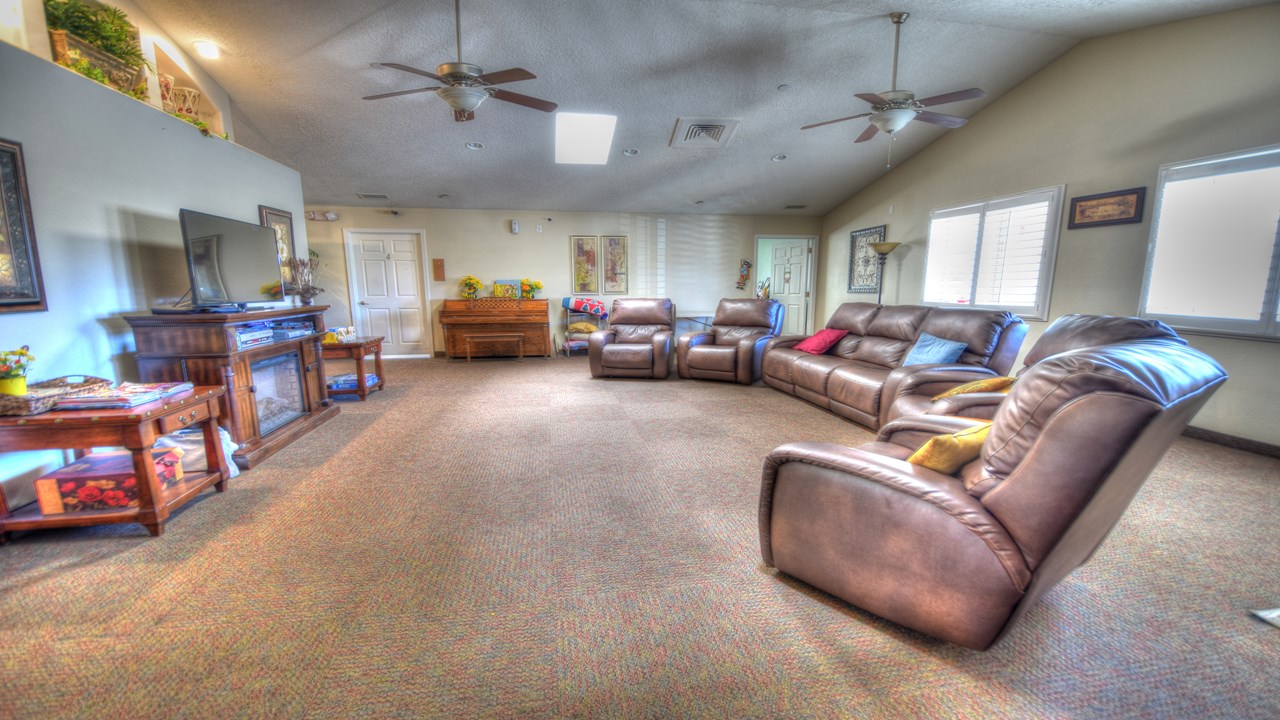
The physical design of a small assisted living home quietly pushes people towards one another. I remember one four-bedroom residential care home where you might stand in the kitchen area and see almost whatever: the front door, the open living-room, the hallway to the bedrooms, and the yard patio.
The impact on care was obvious. When a resident began to stand up from a chair, personnel noticed right away. When somebody looked lost, the caregiver chopping veggies could call out, "Hi Helen, we remain in here," and Helen would follow the sound of the voice. Residents could wander, but they might not genuinely disappear.
In larger buildings, staff rely greatly on innovation and set up rounds to keep track of citizens. Call bells, door alerts, video cameras in corridors. Those tools can be useful, however they are reactive. Something has to go incorrect first.
In a little home, the layout itself supports early detection. Caregivers see the subtle signs that normally precede crises: a resident circling around the same entrance numerous times, somebody who stops signing up with the table for coffee, changes in posture or gait. Those small shifts in behavior are often the first flag of an infection, anxiety, discomfort, or a developing fall risk.
There is another piece that seldom makes the sales brochure: shared space in a little home generally feels more like a living room and less like a lobby. That matters for connection. Individuals naturally cluster where there is activity, motion, and discussion. If the main event area is the size of a living room instead of a hotel atrium, locals are far more most likely to see each other, observe each other, and gradually form the little, normal bonds that make life feel worth living.
How small groups develop deeper relationships
Most families undervalue just how much staffing structure influences the emotional tone of dementia care. The job title might be "caretaker" or "resident aide," however in practice these employee are the main relationship in a resident's life, frequently more present than family or friends.
In large senior care communities, personnel scheduling looks like a grid. Citizens are appointed to a hall or an area; personnel are assigned by shift and ratio. Turnover is greater. Floaters plug staffing holes. A resident might work with one caregiver for a couple of weeks, then never see them once again if schedules change.
In a little assisted living home, staffing looks more like a roster of familiar faces. The exact same 5 to 10 individuals cover most shifts. The owner or supervisor often works on site, not in a distant office. If somebody calls out, you are most likely to see the manager rolling up their sleeves than an unknown agency worker appearing at 10 p.m.
Over time, this consistency permits staff and homeowners to build up shared history. A caretaker learns that Mr. Jackson relaxes if you give him a warm washcloth to hold while you clean his face, or that Mrs. Chen will only accept her nighttime medications after she enjoys the evening news. These information might never make it into an official care plan, however they are the glue that holds every day life together.
For locals with dementia, relationships are not anchored in biography so much as in sensory memory. They might not keep in mind that a caregiver's name is Maria, but they keep in mind "the one who sings while she makes my coffee" or "the man who wears the plaid shirts." Little homes make it simpler for those sensory signatures to end up being steady and soothing.
Families feel the difference too. In a large building, it is simple to seem like you are disrupting someone's workflow whenever you ask questions. In a small home, the group is frequently pleased, even relieved, to sit at the cooking area table and hear in-depth stories about your mother's regimens and choices. The more they know, the simpler their work becomes.
Everyday life: small routines, big impact
When people picture memory care, they typically consider structured activities: bingo, exercise class, art therapy. These can be beneficial, but in little homes, the strongest connections often form around normal, repeated tasks.
I have watched a resident with extreme dementia aid fold washcloths every afternoon at a little memory care home. She sat at the table, matching corners with intense concentration, then stacking the cool squares. Personnel could have folded that laundry in five minutes. Rather, they turned it into a daily routine that gave her a sense of purpose and belonging.
In a small setting, there is room for that sort of slow, relationship-focused care. The line in between "task" and "activity" blurs. Mealtimes extend into social time. A caretaker can stand at the range preparing scrambled eggs while talking with three citizens seated close by, inquiring about preferred breakfast foods from their youth. Homeowners smell the food, hear the clatter of pans, and participate in conversation, even if their words are fragmented.
These micro-rituals serve several functions simultaneously:
They anchor the day with foreseeable rhythms. They offer staff and citizens shared referral points. They invite citizens into participation instead of passive observation. Within that repeated structure, individual connections strengthen.
In a big building, safety and performance frequently push against this sort of versatile, relational approach. When a dining-room serves 60 people, you can not reasonably let homeowners remain near the grill or help with flavoring. Meals end up being shifts to perform, not shared experiences to live through together.
Family participation and the function of respite care
For lots of households, the path into a small assisted living home or memory care house starts with respite care. A partner or adult kid is tired, but not yet prepared to devote to a permanent relocation. They might organize a a couple of week stay so they can take a trip, recuperate from surgical treatment, or simply rest.
Short-term remains in a little home can be a discovery. The individual with dementia is not lost in a crowd. Personnel often have the bandwidth to communicate in detail, not just with crisis updates.
I remember a husband who unwillingly positioned his better half for a two-week respite in a six-bed residential care home. He arrived each early morning at 9, sat in the typical location, and saw everything. By day 3, he was no longer hovering. He was asking the caregivers how they got his other half to accept a shower so calmly. By day seven, he admitted, "She is more unwinded here than she is at home."
The size of the home made his involvement easy. There was always a chair, always a caretaker readily available to answer concerns, constantly a natural entry point for him to sit with his wife without seeming like he was in the way.
Family involvement generally looks different in smaller sized settings:
You tend to see shorter, more frequent visits rather than long, exhausting marathons. Families are familiar with not only the staff but also the other locals, and sometimes their relatives. That cross-connection constructs a sense of community and shared watchfulness that is tough to reproduce in a big facility where you hardly ever encounter the very same individuals at the very same time.
When a crisis does happen, such as a hospitalization or a significant change in behavior, those existing relationships make planning simpler. You are not speaking to complete strangers about your loved one; you are speaking to people who have peeled oranges for them, chuckled with them during music hour, and enjoyed their nightly habits.
Emotional security and behavioral symptoms
People often assume that small assisted living homes are best for "simple" residents and that those with more intense behavioral concerns from dementia need the infrastructure of a bigger memory care system. The truth is more complicated.
Behavioral expressions like agitation, roaming, watching, or calling out frequently soften in environments where the person feels seen and safe. Small homes are particularly proficient at creating that emotional safety.

Consider wandering. In a large neighborhood, a resident who continuously walks the halls is deemed a fall danger and a supervision difficulty. Staff might attempt diversion activities, medications, and even secured units. In a little home with enclosed outdoor area, that exact same walking can be reframed as "Mr. Thompson's day-to-day path." Staff understand his pattern, stroll with him sometimes, and keep subtle eyes on him when he is in the yard.
When locals feel less overwhelmed by noise and crowds, their nervous systems run cooler. That alone can reduce the requirement for psychotropic medications. It is not a treatment, and little homes definitely have locals with challenging behaviors, however the baseline tension is frequently lower.
There are compromises. Some small homes are not equipped for homeowners with severe physical aggression, two-person transfer needs, or complex medical gadgets. Larger communities may have specialized memory care wings with more robust staffing ratios, on-site nurses, and access to treatment services. The key is not to romanticize small homes as wonderful spaces where dementia ends up being easy, however to acknowledge that their extremely scale modifications how behaviors manifest and how relationships form the response.
When a larger community might be a better fit
Small does not equivalent better for each individual or every household. There are scenarios where a larger assisted living or committed memory care neighborhood can use advantages.
If your loved one has a very high social drive and is still in earlier-stage dementia, they might take pleasure in the variety and bustle of a bigger setting, with more structured activities and more people to meet. Some big communities provide specialized programs, on-site physical therapy, going to professionals, and transportation options that small homes can not match.
Families who want a strong line between "home" and "care" often feel more comfy with a bigger, more official environment. In a small residential care home, the intimacy can feel too close for some household dynamics. You may feel obligated to go to occasions or answer more individual concerns about household history than you would in a huge building where privacy is easier.
Cost can cut in either case. In some markets, small homes are more budget friendly than large neighborhoods; in others, they are priced as premium memory care. Insurance coverage, veterans' advantages, and Medicaid waivers may use in a different way depending on state policies and licensure categories.
The most honest way to think about size is not as a moral ranking however as a set of trade-offs. If you know that deep, consistent relationships are important for your loved one, then small homes deserve a serious appearance, even if you also tour larger senior care campuses.
Questions to ask when exploring small assisted living homes
A tour informs you a lot, but just if you understand where to look. When you visit a small assisted living or memory care home, a couple of targeted concerns can reveal how well the setting really supports strong connections in dementia care:
- How many residents live here, and what is the common staff-to-resident ratio on days, nights, and nights?
- How long have the majority of your caregivers worked in this home, and how do you handle turnover or staffing gaps?
- Can you explain a typical day for someone with dementia who lives here, from getting up to bedtime?
- How do you be familiar with a new resident's life story, regimens, and preferences, and how is that details shared amongst staff?
- When a resident is upset or declining care, what are the first three things your team generally tries before thinking about medication or outside intervention?
Pay attention to how quickly team member use homeowners' names, who they introduce you to, whether residents make eye contact, and whether anybody appears parked in front of a tv for long stretches. Notification the smells from the kitchen, the tone of background noise, and how staff react if a resident interrupts your tour.
The greatest small homes can answer comprehensive questions without defensiveness, and they will often offer stories that illustrate their approach instead of relying only on policy language.
Bringing it back to what matters
Families often pertain to me inquiring about facilities, licensing, and care levels, but the questions that ultimately shape their comfort are quieter: Who will see if my mother appears off? Who will sit with my hubby when he is frightened in the evening and can not keep in mind why? Who will commemorate the small success that just matter if you actually know the person?
Small assisted living homes and residential memory care houses are distinctively placed respite care to address those concerns with something more than a brochure line. Their scale makes indifference more difficult and connection most likely. Personnel and locals do not just share area; they share a life rhythm.
Assisted living, memory care, and respite care are not interchangeable labels. They are different setups of time, attention, and relationship. When dementia belongs to the image, that configuration matters more than nearly anything else. A smaller sized setting does not eliminate the losses that include cognitive decrease, however it does make room for something just as real: the ongoing, daily experience of being known.
BeeHive Assisted Living Homes of Rio Rancho NM #1 - Dementia Care & Memory Care provides assisted living care
BeeHive Assisted Living Homes of Rio Rancho NM #1 - Dementia Care & Memory Care provides memory care services
BeeHive Assisted Living Homes of Rio Rancho NM #1 - Dementia Care & Memory Care provides respite care services
BeeHive Assisted Living Homes of Rio Rancho NM #1 - Dementia Care & Memory Care supports assistance with bathing and grooming
BeeHive Assisted Living Homes of Rio Rancho NM #1 - Dementia Care & Memory Care offers private bedrooms with private bathrooms
BeeHive Assisted Living Homes of Rio Rancho NM #1 - Dementia Care & Memory Care provides medication monitoring and documentation
BeeHive Assisted Living Homes of Rio Rancho NM #1 - Dementia Care & Memory Care serves dietitian-approved meals
BeeHive Assisted Living Homes of Rio Rancho NM #1 - Dementia Care & Memory Care provides housekeeping services
BeeHive Assisted Living Homes of Rio Rancho NM #1 - Dementia Care & Memory Care provides laundry services
BeeHive Assisted Living Homes of Rio Rancho NM #1 - Dementia Care & Memory Care offers community dining and social engagement activities
BeeHive Assisted Living Homes of Rio Rancho NM #1 - Dementia Care & Memory Care features life enrichment activities
BeeHive Assisted Living Homes of Rio Rancho NM #1 - Dementia Care & Memory Care supports personal care assistance during meals and daily routines
BeeHive Assisted Living Homes of Rio Rancho NM #1 - Dementia Care & Memory Care promotes frequent physical and mental exercise opportunities
BeeHive Assisted Living Homes of Rio Rancho NM #1 - Dementia Care & Memory Care provides a home-like residential environment
BeeHive Assisted Living Homes of Rio Rancho NM #1 - Dementia Care & Memory Care creates customized care plans as residents’ needs change
BeeHive Assisted Living Homes of Rio Rancho NM #1 - Dementia Care & Memory Care assesses individual resident care needs
BeeHive Assisted Living Homes of Rio Rancho NM #1 - Dementia Care & Memory Care accepts private pay and long-term care insurance
BeeHive Assisted Living Homes of Rio Rancho NM #1 - Dementia Care & Memory Care assists qualified veterans with Aid and Attendance benefits
BeeHive Assisted Living Homes of Rio Rancho NM #1 - Dementia Care & Memory Care encourages meaningful resident-to-staff relationships
BeeHive Assisted Living Homes of Rio Rancho NM #1 - Dementia Care & Memory Care delivers compassionate, attentive senior care focused on dignity and comfort
BeeHive Assisted Living Homes of Rio Rancho NM #1 - Dementia Care & Memory Care has a phone number of (505) 221-6400
BeeHive Assisted Living Homes of Rio Rancho NM #1 - Dementia Care & Memory Care has an address of 204 Silent Spring Rd NE, Rio Rancho, NM 87124
BeeHive Assisted Living Homes of Rio Rancho NM #1 - Dementia Care & Memory Care has a website https://beehivehomes.com/locations/rio-rancho/
BeeHive Assisted Living Homes of Rio Rancho NM #1 - Dementia Care & Memory Care has Google Maps listing https://maps.app.goo.gl/FhSFajkWCGmtFcR77
BeeHive Assisted Living Homes of Rio Rancho NM #1 - Dementia Care & Memory Care has Facebook page https://www.facebook.com/BeeHiveHomesRioRancho
BeeHive Assisted Living Homes of Rio Rancho NM #1 - Dementia Care & Memory Care has a YouTube Channel at https://www.youtube.com/@WelcomeHomeBeeHiveHomes
BeeHive Assisted Living Homes of Rio Rancho NM #1 - Dementia Care & Memory Care won Top Memory Care Homes 2025
BeeHive Assisted Living Homes of Rio Rancho NM #1 - Dementia Care & Memory Care earned Best Customer Service Award 2024
BeeHive Assisted Living Homes of Rio Rancho NM #1 - Dementia Care & Memory Care placed 1st for Assisted Living Communities 2025
People Also Ask about BeeHive Assisted Living Homes of Rio Rancho NM #1 - Dementia Care & Memory Care
What is BeeHive Homes of Rio Rancho Living monthly room rate?
The rate depends on the level of care that is needed (see Pricing Guide above). We do a pre-admission evaluation for each resident to determine the level of care needed. The monthly rate is based on this evaluation. There are no hidden costs or fees
Can residents stay in BeeHive Homes of Rio Rancho until the end of their life?
Usually yes. There are exceptions, such as when there are safety issues with the resident, or they need 24 hour skilled nursing services
Does BeeHive Homes of Rio Rancho have a nurse on staff?
No, but each BeeHive Home has a consulting Nurse available 24 – 7. if nursing services are needed, a doctor can order home health to come into the home
What are BeeHive Homes of Rio Rancho visiting hours?
Visiting hours are adjusted to accommodate the families and the resident’s needs… just not too early or too late
Do we have couple’s rooms available?
Yes, each home has rooms designed to accommodate couples. Please ask about the availability of these rooms
Where is BeeHive Homes of Rio Rancho located?
BeeHive Homes of Rio Rancho is conveniently located at 204 Silent Spring Rd NE, Rio Rancho, NM 87124. You can easily find directions on Google Maps or call at (505) 221-6400 Monday through Friday 9:00am to 5:00pm
How can I contact BeeHive Homes of Rio Rancho?
You can contact BeeHive Assisted Living Homes of Rio Rancho NM #1 - Dementia Care & Memory Care by phone at: (505) 221-6400, visit their website at https://beehivehomes.com/locations/rio-rancho, or connect on social media via Facebook or YouTube
Visiting the Haynes Community Center and Park provides a quiet neighborhood setting where seniors in assisted living and memory care can relax outdoors during senior care and respite care visits.